


Choking is one of the most serious and time-sensitive emergencies that can happen during childhood. It can occur suddenly while a child is eating, playing, or exploring their surroundings, causing an object to become trapped in the airway and preventing normal breathing. For parents, caregivers, teachers, and anyone responsible for children, knowing how to respond quickly and correctly during such situations is extremely important.
Paediatric first aid for choking provides clear and structured guidance on how to manage airway blockages in babies and children. While it does not replace professional medical care, it helps caregivers take immediate action before emergency services arrive. Children are more vulnerable to choking than adults because they have smaller airways, developing chewing abilities, and a natural tendency to put objects in their mouths while exploring.
In this complete guide, we will explain what paediatric choking is, why it happens, the early warning signs, and the correct step-by-step first aid procedures for babies and children. You will also learn what actions to avoid, prevention strategies, common choking scenarios, and answers to frequently asked questions to help you respond with greater confidence during a choking emergency.
What Is Paediatric Choking?
Paediatric choking occurs when a foreign object becomes stuck in a child’s airway, partially or completely blocking airflow to the lungs. The airway includes the throat (pharynx), windpipe (trachea), and lungs. When any part of this pathway is obstructed, oxygen cannot reach the body properly.
Types of Choking
Choking is generally divided into two categories:
1. Partial Airway Obstruction
- The airway is narrowed but not fully blocked
- The child can still cough, cry, or speak
- Breathing may be noisy or strained
- This type can sometimes resolve naturally
2. Complete Airway Obstruction
- No air can pass through
- The child cannot speak, cry, or cough
- Breathing stops or becomes silent
- This is a medical emergency
Understanding the difference is important because it determines the immediate response.
Table of Contents
Paediatric First Aid Training for just £11.99
Today!
You won’t find this deal anywhere else!
Take The CourseUse Coupon Code:
Use this coupon at Checkout
Why Children Are at Higher Risk of Choking
Children, particularly those under the age of five, are more vulnerable to choking incidents due to their physical development, behaviour, and limited awareness of potential dangers. Their smaller body size, developing eating skills, and natural curiosity make certain situations more likely to result in airway obstruction.
1. Small Airway Size
Children have much smaller airways compared to adults, which means even small pieces of food or tiny objects can create a serious blockage. Because their air passages are narrower, an obstruction can quickly affect their ability to breathe normally.
2. Natural Curiosity and Exploration
Young children learn about the world by touching, holding, and exploring objects around them. As part of this natural development, they often put toys, small items, or unfamiliar objects into their mouths, increasing the risk of accidental choking.
3. Developing Chewing and Swallowing Skills
Babies and toddlers are still learning how to chew and swallow food properly. They may not break food into smaller pieces before swallowing, which can increase the chance of larger pieces becoming stuck in the airway.
4. Eating While Running or Playing
Children may become distracted or excited while eating, especially during playtime or social activities. Running, laughing, or moving around with food in their mouth can increase the risk of food entering the airway incorrectly.
5. Limited Awareness of Choking Hazards
Young children do not fully understand which foods or objects can be dangerous. They may not recognise the risks associated with small toys, certain foods, or unsafe eating habits, making supervision and safety awareness essential.
Common Objects and Foods That Cause Choking

Many choking incidents are caused by everyday items.
Food-related hazards:
- Grapes (especially whole)
- Sausages and hot dogs
- Nuts
- Popcorn
- Hard sweets
- Large pieces of fruit or vegetables
Non-food hazards:
- Small toys or toy parts
- Coins
- Buttons
- Balloons
- Batteries (very dangerous)
- Marbles
Being aware of these hazards is the first step in prevention.
Signs and Symptoms of Choking in Children
Recognizing choking quickly is critical.
Early signs:
- Sudden silence during eating or play
- Panic or confusion
- Coughing or gagging
- Holding throat
Moderate obstruction signs:
- Difficulty breathing
- Wheezing or high-pitched sounds
- Weak coughing
- Red or flushed face
Severe obstruction signs:
- Inability to speak or cry
- No effective cough
- Blue lips or skin (cyanosis)
- Collapse or unconsciousness
Immediate Actions for Paediatric Choking (Step-by-Step Guide)
Step 1: Assess the Situation Calmly
Before acting, quickly determine
- Is the child coughing effectively?
- Are they able to breathe or speak?
If yes → encourage coughing
If no → treat as severe choking
Step 2: Call for Emergency Help
- Call emergency services immediately
- If others are present, ask someone to call
- Do not delay first aid actions
First Aid for Children Over 1 Year Old

Step 1: Back Blows (5 Times)
- Stand behind the child
- Lean them slightly forward
- Support chest with one hand
- Deliver 5 sharp back blows between shoulder blades
- Use the heel of your hand
Check after each blow whether the object is dislodged.
Step 2: Abdominal Thrusts (Heimlich Manoeuvre)
If back blows fail:
- Stand behind the child
- Place fist above belly button
- Grasp fist with other hand
- Pull inward and upward sharply
- Repeat up to 5 times
Alternate between back blows and abdominal thrusts if needed.
Step 3: Continue Until Help Arrives or Object Is Removed
Repeat cycles:
- 5 back blows
- 5 abdominal thrusts
Stop only if:
- Object comes out
- Child starts breathing
- Child becomes unconscious
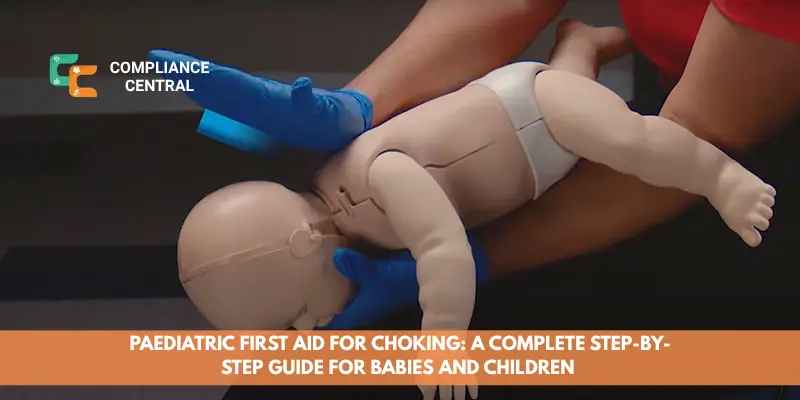
First Aid for Babies Under 1 Year
Babies require a different technique because their bodies are more delicate.
Step 1: Position the Baby
- Lay baby face down on your forearm
- Support head lower than chest
- Hold jaw securely
Step 2: Give 5 Back Blows
- Use heel of hand
- Deliver 5 firm blows between shoulder blades
- Check after each blow
Step 3: Turn Baby Over Carefully
- Support head and neck
- Turn baby face-up
- Keep head lower than body
Step 4: Give 5 Chest Thrusts
- Use two fingers in chest center
- Push downward quickly
- Repeat up to 5 times
Step 5: Repeat Cycle
Continue:
- 5 back blows
- 5 chest thrusts
Until:
- Object is removed
- Baby breathes normally
- Emergency help arrives
What NOT to Do During Choking

Avoid these dangerous mistakes:
- Do not blindly sweep inside the mouth
- Do not give water or food
- Do not shake the child
- Do not delay action
- Do not perform abdominal thrusts on infants
- Do not panic or freeze
Incorrect actions may worsen obstruction.
What Happens If the Child Becomes Unconscious
If the child collapses:
Immediate actions:
- Call emergency services
- Start CPR immediately
- Open airway carefully
- Check for visible object
If visible, remove it carefully
Do NOT perform blind finger sweep
Continue CPR until help arrives.
Real-Life Choking Scenarios in Children
Understanding real-life choking situations helps parents, caregivers, and teachers recognise how quickly these emergencies can occur. Choking incidents are often unexpected and can happen during everyday activities such as eating, playing, or spending time in childcare settings.
Scenario 1: Choking on Food at Home
A young child is eating grapes during a meal without close supervision. Suddenly, the child stops making sounds, struggles to breathe, and is unable to speak or cough effectively. This situation requires immediate recognition and a quick first aid response.
Scenario 2: Playground Incident
While playing, a child finds a small toy component or loose object and accidentally places it in their mouth. The object becomes lodged in the airway, creating a choking risk. This highlights the importance of choosing age-appropriate toys and supervising children during play.
Scenario 3: Nursery Lunch Accident
During lunchtime at a nursery, a toddler eats too quickly and begins choking on a piece of bread. Staff members need to recognise the signs immediately and follow the correct paediatric first aid procedures to support the child.
These examples demonstrate that choking can happen suddenly in everyday environments, including homes, playgrounds, and childcare settings. Awareness, supervision, and proper paediatric first aid knowledge help caregivers respond quickly and effectively when emergencies occur.
Prevention Strategies for Parents and Caregivers
Prevention reduces risk significantly.
Food Safety:
- Cut food into small pieces
- Avoid hard foods for young children
- Supervise meals
- Encourage slow eating
Toy Safety:
- Avoid small detachable parts
- Follow age recommendations
- Regularly inspect toys
Supervision:
- Always supervise toddlers while eating
- Avoid distractions during meals
- Teach older children safe eating habits
Importance of Paediatric First Aid Training
Understanding theory is helpful, but paediatric first aid training provides practical confidence.
Training covers:
- Choking response techniques
- CPR for babies and children
- Emergency decision-making
- Injury management
- Real-life simulations
It helps caregivers respond without hesitation during emergencies.
Common Myths About Choking First Aid
There are many misconceptions about how to respond during a choking emergency. While some actions may seem helpful, incorrect methods can delay proper treatment or make the situation worse. Understanding the facts behind common choking myths helps parents, caregivers, and teachers respond more safely and effectively.

Myth 1: Giving Water Can Help Clear the Throat
❌ Incorrect – Water should not be given during a choking emergency.
When an object is blocking the airway, giving water or food may not remove the blockage and could make breathing more difficult. The priority should be following the correct first aid steps to help clear the airway.
Myth 2: A Finger Sweep Always Removes the Object
❌ Incorrect – Only remove an object if it is clearly visible and easy to reach.
Putting fingers into a child’s mouth without seeing the object can accidentally push it further into the airway. A blind finger sweep may increase the risk and should be avoided.
Myth 3: Randomly Hitting the Child’s Back Will Solve the Problem
❌ Incorrect – Uncontrolled or incorrect actions may cause harm.
Back blows are an important part of choking first aid, but they must be performed using the correct technique and position. Random hitting may not help and could delay effective treatment.
Myth 4: A Child Will Always Cough the Object Out
❌ Incorrect – Severe choking may prevent effective coughing.
A child with a partial blockage may be able to cough, but a complete airway obstruction can stop them from speaking, crying, or breathing. Recognising the difference is essential for taking the right action quickly.
Understanding these myths helps caregivers avoid common mistakes and improves their ability to respond confidently during a choking emergency.
Psychological Impact of Choking Emergencies
Choking emergencies can be extremely distressing for parents, caregivers, teachers, and anyone responsible for a child’s safety. The sudden nature of the situation, combined with the fear of not knowing what to do, can lead to feelings of panic, anxiety, and confusion. Even after the child has recovered, caregivers may continue to feel shaken or worried about the possibility of another incident.
Having proper paediatric first aid training can help reduce the emotional impact of these situations. Training provides a clear understanding of what steps to follow, helping caregivers remain calmer and make better decisions under pressure. Confidence gained through preparation allows individuals to focus on supporting the child rather than becoming overwhelmed by fear.
Understanding choking risks and learning the correct response techniques also helps caregivers feel more prepared in everyday situations. This awareness can reduce stress, improve confidence, and create a safer environment at home, schools, nurseries, and other childcare settings.
When to Seek Medical Attention
Even if a choking incident appears to be resolved, it is important to carefully monitor the child and seek medical advice when necessary. Removing the object does not always mean that there are no remaining risks, as complications may develop after the emergency has passed.
Medical attention should be considered if:
➽ Breathing was difficult – If the child struggled to breathe during the incident or continues to show unusual breathing patterns, professional assessment may be required.
➽ The object was only partially removed – If there is any concern that part of the object remains in the airway, medical support should be sought to prevent further complications.
➽ The child became unconscious – Loss of consciousness during choking requires urgent medical evaluation, even if the child appears to recover afterwards.
➽ You are uncertain about the child’s condition – If you are unsure whether the child is fully recovered or notice unusual behaviour, seeking medical advice is the safest option.
In some cases, internal irritation, injury, or aspiration (where material enters the airway or lungs) may not be immediately obvious. Monitoring the child after a choking episode and getting professional advice when needed helps ensure their ongoing safety and wellbeing.
Conclusion
Paediatric choking is a serious emergency that can happen suddenly and requires immediate attention. In situations where a child cannot breathe due to an airway blockage, knowing how to respond quickly and correctly can make a life-saving difference. Recognising the signs of choking, staying calm, and following the correct first aid steps are essential for protecting a child’s safety.
From identifying partial and complete airway obstruction to understanding the correct response for babies and older children, every step in this process plays an important role. It is equally important to know what actions should be avoided, as incorrect responses may increase risk or delay proper help.
Although this guide provides essential awareness, further structured learning can help build stronger confidence in responding to real-life situations. Enrolling in Paediatric First Aid Training helps parents, caregivers, and professionals understand emergency response procedures more clearly and become better prepared to manage child-related emergencies effectively.
By completing Paediatric First Aid Training, individuals gain the knowledge needed to respond quickly, stay calm under pressure, and take appropriate action when it matters most. This contributes to a safer environment for children at home, in schools, and in community settings.
Being prepared is not just about knowledge—it is about being ready to act when every second counts.
Frequently Asked Questions (FAQ)
Paediatric choking occurs when a baby or child’s airway becomes blocked by food, a toy, or another object. This blockage can prevent normal breathing and requires immediate attention.
The first step is to quickly assess whether the child can breathe, cough, cry, or speak. If the child cannot breathe effectively, emergency help should be called while providing appropriate first aid.
Yes, effective coughing can sometimes remove a partial blockage naturally. If the child is coughing strongly, encourage them to continue coughing while monitoring their condition.
Food items and small objects are the most common causes of choking in children. Foods such as grapes, nuts, and hard sweets, along with small toys, can create serious risks.
A severe choking incident can become dangerous within minutes because the child may not receive enough oxygen. Quick recognition and immediate action are essential during these situations.
Yes, babies can experience silent choking, especially when the airway is completely blocked. They may be unable to cry, cough, or make sounds, making quick recognition extremely important.
For babies under one year, first aid generally involves back blows and chest thrusts using the correct technique. These methods are designed specifically for an infant’s smaller and more delicate body.
For children over one year old, choking first aid typically includes back blows followed by abdominal thrusts if needed. The correct response depends on the severity of the blockage.
An object should only be removed if it is clearly visible and easy to reach. Blindly putting fingers into the child’s mouth can push the object further into the airway.
Yes, severe choking can lead to oxygen deprivation if the airway remains blocked for too long. Lack of oxygen can affect the brain and requires urgent action.
No, giving water during a choking emergency is not recommended. It will not remove the blockage and may make the situation more difficult to manage.
Children under five years old are generally at higher risk because their airways are smaller and their chewing skills are still developing. Young children also tend to explore objects by putting them in their mouths.
Yes, many choking incidents can be reduced through proper supervision and safety measures. Cutting food into suitable sizes and keeping small objects away from children can help prevent risks.
Paediatric first aid training is highly recommended for parents, caregivers, teachers, and anyone responsible for children. It provides confidence and practical knowledge for handling emergencies.
Even after the object is removed, it is important to monitor the child carefully. Medical advice may be needed, especially if breathing difficulties occurred or there are concerns about their recovery.

Related Blogs

Course Categories
- Workplace Safety
- Travel
- Training
- Therapy
- Technology
- Teaching and Education
- Teaching and Academics
- Teaching
- Stress Management
- Sports
- Safeguarding
- QLS Endorsed
- Public Speaking
- Psychology
- Project Management
- Philosophy
- Personal Development
- Nutrition & Diet
- Mental Health
- Marketing
- Management
- Lifestyle
- Leadership
- Law
- Language
- IT and Software
- Interpersonal Communication
- Hospitality
- Healthcare
- Health and Social Care
- Health and Safety
- Health and Fitness
- Hazard Awareness
- Forensic Science
- Food Safety
- Food Hygiene
- Food & Beverage
- First Aid
- Fire Safety
- Fashion Design
- Fashion
- Environment
- Entrepreneurship
- Engineering
- Employability
- Electronics
- Electrical Safety
- Education
- Development
- Design
- Data Science
- Counselling
- Cooking
- Construction
- Communication
- Cleaning
- Child Psychology
- Child Care
- Business Skills
- Business Skill
- Business
- Awareness
- Assertiveness
- Animal Care
- Agriculture
- Accounting and Finance