


Safeguarding children is one of the most important responsibilities in any society. Every child deserves to grow up in a safe, supportive, and nurturing environment where they are protected from harm and allowed to reach their full potential. However, achieving this requires clear systems, consistent decision-making, and shared responsibility across families, schools, healthcare services, and communities.
This is where the 6 principles of child safeguarding play a vital role.
When people search for what are the 6 principles of child safeguarding, they are usually trying to understand the core framework that guides safeguarding practice in the UK and other child protection systems. These principles provide a structured approach to ensuring children are protected from abuse, neglect, exploitation, and harm while promoting their wellbeing.
The safeguarding principles are not just theoretical ideas—they are practical guidelines used in real-life situations such as schools, hospitals, social services, and community organisations. They help professionals and caregivers make consistent and fair decisions when dealing with child safety concerns.
In this complete guide, you will learn:
- What the 6 principles of child safeguarding are
- What each principle means in detail
- Why these principles are important
- How they are applied in real-life settings
- The difference between safeguarding principles and child protection
- Common challenges in applying them
- Their benefits in protecting children
- Frequently asked questions
By the end of this article, you will have a clear and practical understanding of safeguarding principles and how they contribute to protecting children in everyday life.
Table of Contents
Safeguarding Children Level 3 for just £11.99
Today!
You won’t find this deal anywhere else!
Take The CourseUse Coupon Code:
Use this coupon at Checkout
What Are the 6 Principles of Child Safeguarding?
The 6 principles of child safeguarding are a set of core values that guide how children should be protected and supported. These principles ensure that safeguarding is carried out in a consistent, fair, and effective way across all services that work with children.
The six principles are:
- Empowerment
- Prevention
- Protection
- Proportionality
- Partnership
- Accountability
Together, these principles form the foundation of safeguarding practice and help ensure that children’s welfare is always prioritised.
These principles are widely used in schools, childcare settings, healthcare services, and social care systems. They help professionals make decisions that are in the best interest of the child while balancing safety, rights, and wellbeing.
What Does Each Safeguarding Principle Mean?
To fully understand what are the 6 principles of child safeguarding, it is important to explore each principle in detail.
1. Empowerment
Empowerment means involving children and families in decisions that affect their lives. It ensures that children are not passive recipients of care but active participants in their own safety and wellbeing.
In safeguarding practice, empowerment involves:
- Listening to children’s voices
- Encouraging children to express concerns
- Supporting families to make informed decisions
- Respecting dignity and independence
Empowerment is important because children who feel heard are more likely to seek help when they need it.
For example, in a school setting, a child should feel confident enough to speak to a teacher if something is wrong. Empowerment builds trust and encourages communication.

2. Prevention
Prevention focuses on stopping harm before it happens. It is one of the most important principles in safeguarding because it reduces risks early.
Prevention includes:
- Teaching children about safety
- Training adults to recognise risks
- Creating safe environments
- Providing early support to families
Instead of waiting for harm to occur, prevention aims to identify risks early and take action to reduce them.
For example, schools may teach online safety to prevent cyberbullying or exploitation.
3. Protection
Protection is about taking action when a child is at risk or has already been harmed. This principle ensures that vulnerable children receive immediate support and intervention.
Protection includes:
- Reporting safeguarding concerns
- Investigating risks
- Providing emergency support
- Removing children from unsafe environments when necessary
This principle becomes active when there is a serious concern about a child’s safety.
For example, if a teacher notices signs of neglect, they must report it so appropriate action can be taken.
4. Proportionality
Proportionality means responding to safeguarding concerns in a way that is appropriate to the level of risk.
Not every situation requires the same level of response. Some cases may need immediate intervention, while others may require monitoring and support.
Proportionality involves:
- Assessing risk carefully
- Avoiding unnecessary interference in family life
- Using the least intrusive solution possible
This ensures fairness and avoids overreaction while still protecting children effectively.
5. Partnership
Partnership means working together across different organisations and individuals to protect children.
Safeguarding is not the responsibility of one person or agency. It involves:
- Schools
- Social services
- Healthcare professionals
- Police
- Families
- Community organisations
Working together ensures that information is shared appropriately and children receive the right support.
For example, a school may work with social services and healthcare professionals to support a child with complex needs.
6. Accountability
Accountability means that everyone involved in safeguarding is responsible for their actions and decisions.
It ensures:
- Transparency in safeguarding processes
- Clear roles and responsibilities
- Proper reporting and documentation
- Professional responsibility
Accountability ensures that safeguarding is taken seriously and that mistakes or failures are addressed appropriately.
It also helps build trust between families, professionals, and organisations.
Why Are the 6 Principles of Child Safeguarding Important?
The 6 principles of child safeguarding are important because they provide a clear framework for protecting children and promoting their wellbeing. They help professionals, organisations, and caregivers follow a consistent approach when identifying risks, making decisions, and responding to safeguarding concerns. These principles ensure that children’s safety, rights, and development remain the main priority.

1. They Guide Decision-Making
Safeguarding professionals often need to make important decisions when a child may be at risk. The safeguarding principles provide guidance to help them assess situations carefully, consider the child’s needs, and choose actions that are fair, appropriate, and focused on protecting the child.
2. They Protect Children Effectively
Following these principles helps organisations identify potential risks at an early stage and respond before situations become more serious. A structured safeguarding approach allows concerns to be managed properly and ensures children receive the protection and support they need.
3. They Ensure Consistency
Safeguarding principles help different organisations follow a shared approach when working with children. Whether in schools, healthcare settings, or social services, consistent practices ensure that safeguarding decisions are handled fairly, professionally, and effectively.
4. They Promote Child Welfare
The purpose of safeguarding is not only to prevent harm but also to support children’s overall wellbeing and development. These principles encourage environments where children feel safe, respected, listened to, and able to grow emotionally, physically, and socially.
5. They Build Trust
Trust is an essential part of effective safeguarding. When organisations demonstrate transparency, responsibility, and clear communication, children, families, and communities feel more confident that concerns will be taken seriously and managed appropriately.
How Are the 6 Principles Used in Real Life?
Safeguarding principles are applied in many everyday settings.
In Schools
- Teachers observe behaviour changes
- Staff report concerns
- Students are encouraged to speak openly
In Healthcare
- Doctors identify signs of neglect or harm
- Medical staff report concerns
- Safeguarding teams are involved
In Social Services
- Risk assessments are carried out
- Family support is provided
- Child protection plans are created
In Communities
- Neighbours report concerns
- Awareness programs educate families
- Local organisations support children
What Is the Difference Between Safeguarding Principles and Child Protection?
Although safeguarding principles and child protection are closely connected, they serve different purposes within child safety systems. Both aim to protect children, but they focus on different stages of prevention and response.
Safeguarding Principles
Safeguarding principles provide a broad framework for promoting children’s safety, rights, and wellbeing in everyday situations. They focus on preventing harm before it happens and creating environments where all children are supported and protected.
Safeguarding principles:
- Focus on preventing risks and reducing the likelihood of harm
- Apply to every child, regardless of their circumstances
- Promote children’s overall wellbeing and development
- Guide daily practices in schools, healthcare, childcare, and communities
Child Protection
Child protection is a specific part of safeguarding that focuses on situations where a child may already be experiencing harm or facing serious risk. It involves taking action to investigate concerns and provide immediate protection when needed.
Child protection:
- Focuses on individual cases where harm or abuse is suspected
- Involves assessing concerns and carrying out investigations
- Requires action when a child’s safety or wellbeing is at risk
In simple terms, safeguarding provides the foundation for keeping all children safe, while child protection is the action taken when a child requires specific protection from harm.
Common Challenges in Applying Safeguarding Principles
Although safeguarding principles provide a strong framework for protecting children, applying them effectively can sometimes be challenging. Individuals and organisations may face barriers that affect how quickly concerns are identified, reported, and addressed.
1. Lack of Awareness
Some people may not have enough knowledge about safeguarding responsibilities, warning signs, or the correct procedures for responding to concerns. Limited awareness can make it more difficult to recognise risks and take appropriate action at the right time.
2. Fear of Reporting
Individuals may sometimes hesitate to report safeguarding concerns because they are unsure, worried about making mistakes, or concerned about possible consequences. This hesitation can delay support and prevent children from receiving help when they need it.
3. Misinterpretation of Signs
Recognising safeguarding concerns requires careful observation and awareness. Sometimes changes in a child’s behaviour, emotions, or appearance may be misunderstood or overlooked, making it harder to identify potential risks early.
4. Communication Barriers
Effective safeguarding depends on clear communication between families, schools, healthcare professionals, and other agencies. Poor information sharing or misunderstandings between organisations can slow down responses and affect the support provided to children.
Benefits of Following the 6 Principles of Safeguarding
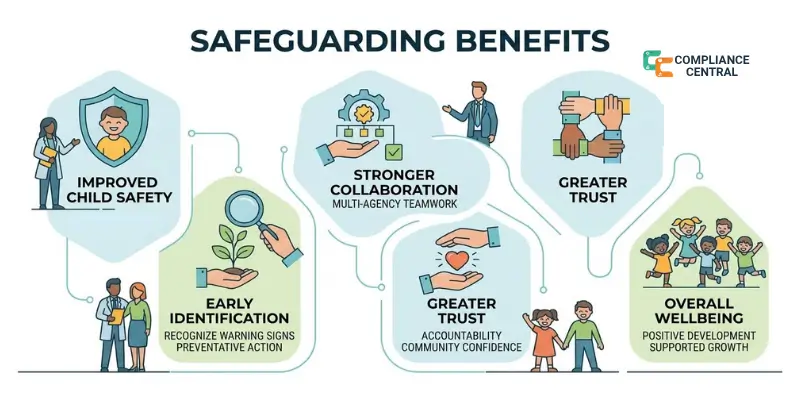
Applying the six principles of safeguarding helps create a more effective and consistent approach to protecting children. These principles support professionals, organisations, and communities in identifying risks, responding appropriately, and promoting children’s overall wellbeing.
Improved Child Safety
Following safeguarding principles helps create safer environments where risks can be recognised and managed effectively. It ensures that children receive appropriate protection and support in different settings.
Early Identification and Intervention
Safeguarding principles encourage people to recognise warning signs and take action at an early stage. Early intervention can help prevent situations from becoming more serious and provide children with the support they need.
Stronger Collaboration Between Services
These principles encourage better teamwork between schools, healthcare providers, social services, families, and other organisations. Effective cooperation ensures that concerns are handled with the right level of support and expertise.
More Effective Protection Systems
A structured safeguarding approach helps organisations develop clear procedures, responsibilities, and reporting systems. This creates stronger frameworks for responding to concerns and maintaining child safety.
Greater Trust in Safeguarding Processes
When safeguarding is carried out with transparency, accountability, and consistency, families and communities gain greater confidence in the systems designed to protect children.
Overall, following the six principles of safeguarding helps build safer environments where children are protected, supported, and able to develop in a positive way.
Conclusion
The 6 principles of child safeguarding form the foundation of all child protection work. They ensure that children are protected, supported, and empowered in every environment they are part of.
By understanding what these principles mean—empowerment, prevention, protection, proportionality, partnership, and accountability—we can see how safeguarding works as a structured and effective system rather than a single action.
These principles are used every day in schools, healthcare settings, and communities to ensure that children are safe and their wellbeing is prioritised. They guide professionals in making the right decisions and help create a consistent approach to child protection.
However, safeguarding is not only the responsibility of professionals. It is a shared duty that involves parents, caregivers, teachers, and society as a whole.
While awareness of these principles is essential, structured learning can significantly improve confidence and understanding. Enrolling in a Safeguarding Children Level 3 training course can help individuals develop deeper knowledge of safeguarding responsibilities, recognise concerns more effectively, and respond appropriately in real-life situations.
By strengthening awareness and understanding of safeguarding principles, we can all contribute to building safer environments where every child is protected, supported, and given the opportunity to thrive.
Frequently Asked Questions (FAQ)
The 6 principles are empowerment, prevention, protection, proportionality, partnership, and accountability. Together, they provide a framework for protecting children and promoting their wellbeing.
Safeguarding principles help organisations and professionals follow a consistent approach to protecting children. They support effective decision-making, early action, and better child safety practices.
Empowerment means involving children and families in decisions that affect their lives. It ensures children’s voices are heard and their views are respected.
Prevention focuses on identifying risks early and taking action before harm occurs. It includes creating safe environments and promoting awareness.
Protection involves taking action when a child is facing harm, abuse, or serious risk. It includes reporting concerns, assessing situations, and providing support.
Partnership means different organisations and individuals working together to safeguard children. Schools, healthcare services, families, and authorities share information and responsibilities.
Accountability means that individuals and organisations are responsible for their safeguarding duties and decisions. It ensures actions are properly recorded, reviewed, and improved when needed.
Safeguarding principles form an important part of recognised safeguarding frameworks and professional responsibilities. Organisations working with children are expected to follow appropriate safeguarding practices.
Safeguarding principles are used by schools, healthcare professionals, social services, childcare providers, and community organisations. Anyone responsible for children’s welfare can apply these principles.
Yes, safeguarding principles help reduce risks through prevention, awareness, and early intervention. They support the identification of concerns before situations become more serious.

Related Blogs

Course Categories
- Workplace Safety
- Travel
- Training
- Therapy
- Technology
- Teaching and Education
- Teaching and Academics
- Teaching
- Stress Management
- Sports
- Safeguarding
- QLS Endorsed
- Public Speaking
- Psychology
- Project Management
- Philosophy
- Personal Development
- Nutrition & Diet
- Mental Health
- Marketing
- Management
- Lifestyle
- Leadership
- Law
- Language
- IT and Software
- Interpersonal Communication
- Hospitality
- Healthcare
- Health and Social Care
- Health and Safety
- Health and Fitness
- Hazard Awareness
- Forensic Science
- Food Safety
- Food Hygiene
- Food & Beverage
- First Aid
- Fire Safety
- Fashion Design
- Fashion
- Environment
- Entrepreneurship
- Engineering
- Employability
- Electronics
- Electrical Safety
- Education
- Development
- Design
- Data Science
- Counselling
- Cooking
- Construction
- Communication
- Cleaning
- Child Psychology
- Child Care
- Business Skills
- Business Skill
- Business
- Awareness
- Assertiveness
- Animal Care
- Agriculture
- Accounting and Finance